Sustainable Trustworthy AI Lab

AI systems that adapt to real-world constraints.

We study how learning and computing systems can remain useful, private, secure, fair, robust, and resource-aware when data, devices, accelerators, networks, energy, water, and carbon are heterogeneous.

PRIVACYSECURITYFAIRNESSHARDWARECOMMUNICATIONENERGYWATERCARBON
RESEARCH PROGRAM

Trustworthiness and sustainability belong in the system model—not in the footnotes.

STAIL is organized around two research pillars connected by a common idea: adaptation under heterogeneity. We build methods that explicitly reason about constraints instead of assuming uniform data, devices, infrastructure, or environmental conditions.

01

Trustworthy Federated & Distributed AI

Learning without centralizing raw data, while addressing statistical heterogeneity, corrupted or poisoned data, unreliable updates, unequal device capability, fairness, privacy, security, and participation cost.

  • Robustness to corrupted / poisoned data
  • Adaptive aggregation & client autonomy
  • Hardware-sensitive fairness
  • Privacy-preserving participation
SAW-FedTHE BRIDGE
02

Sustainable AI Systems & Infrastructure

Scheduling and measurement for AI and flexible computing loads under time- and location-varying water stress, carbon intensity, cost, accelerator availability, and service constraints.

  • Stress-adjusted water
  • GPU-aware scheduling
  • Carbon + water co-optimization
  • Systems measurement
PROJECTS

Research questions, systems, and visual intuition.

Each project is part of the same larger agenda: making resource and trust constraints explicit in AI decision-making.

SUSTAINABLE AI · ACM e-ENERGY 2026

Balancing Bits and Drops

How should data centers reason about water when the consequence of one liter depends on where and when it is consumed?

We developed a stress-adjusted water (SAW) perspective that combines water consumption with spatial and temporal scarcity. The work separates on-site cooling from off-site electricity-generation impacts and models electricity-related water provenance.

Why stress-adjusted water?
water consumed×local stress→SAW
AI INFRASTRUCTURE · SUBMITTED e-ENERGY 2027

GPU-OASIS

Environmental scheduling only matters if the chosen action is actually executable on the AI infrastructure.

The controller reasons jointly about SAW, carbon, electricity cost, GPU type and memory, topology, model residency, checkpoint state, deadlines, inference routing, and latency SLOs.

Feasibility-first control loop
Workload→GPU + topology→Feasible actions→SAW · CO₂ · $
FEDERATED AI · ONGOING

SAW-Fed

What if environmentally inexpensive clients are not statistically representative?

SAW-Fed treats client participation as the controllable decision, combining environmental preference with participation fairness and importance-corrected aggregation.

Environmental preference without statistical erasure
client selection → fairness debt → corrected aggregation
FLEXIBLE ELECTRIC LOADS · SUBMITTED e-ENERGY 2027

EcoCharge / When EV Charging Helps

Charging “overnight” is a clock-time rule. Environmental signals change hour by hour.

This funded student research project studies joint carbon- and stress-adjusted-water-aware EV charging using a full-year Texas/ERCOT replay and residential charging traces.

Signal-aware charging
arrival → flexibility window → lower-impact hours → departure
TRUSTWORTHY FL · IEEE EDGE / SIGMETRICS / TOMPECS

FedASL, FedSRC & FairHetero

Heterogeneous clients should not be treated as identical workers.

FedASL adapts server-side aggregation to reduce the influence of unfavorable or corrupted client updates. FedSRC moves quality-aware control to clients. FairHetero addresses fairness when resource-constrained clients cannot execute the same model architecture.

Three layers of adaptation
SERVER · FedASLCLIENT · FedSRCMODEL · FairHetero
PEOPLE + MENTORING

A lab built around progressive research ownership.

Students can enter through reproducibility, datasets, visualization, or bounded algorithmic extensions, then grow toward owning experiments, systems components, research questions, and papers.

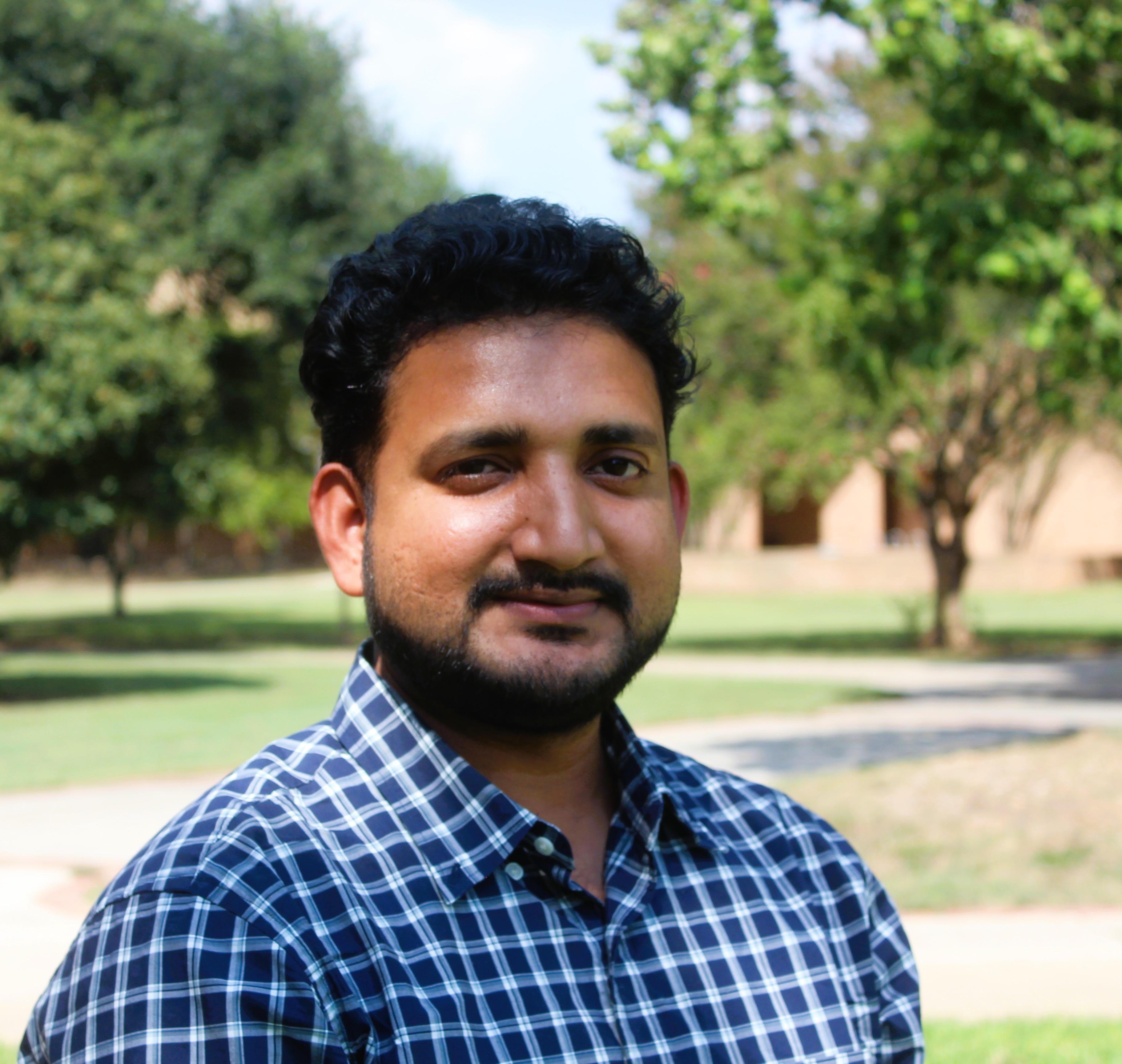
Zahidur Talukder
LAB SUPERVISOR

Zahidur Rahim Talukder, Ph.D.

Assistant Professor of Computer Science, Texas Lutheran University.

Personal website →
2026 FACULTY–STUDENT SUMMER RESEARCH

Duncan Rene Jenkins

Carbon- and stress-adjusted-water-aware EV charging: experiments, data analysis, visualization, and manuscript development.

2026 FACULTY–STUDENT SUMMER RESEARCH

Morgan Grimm

Carbon- and stress-adjusted-water-aware EV charging research.

SELECTED OUTPUTS

Work across AI, systems, sustainability, and edge computing.

2026Balancing Bits and Drops: Stress-Adjusted Water Management for Data Centers.ACM e-Energy

2025Empowering Clients: Self-Adaptive Federated Learning for Data Quality Challenges.IEEE EDGE

2024Hardware-Sensitive Fairness in Heterogeneous Federated LearningACM TOMPECS

2023Enabling Low-Cost Server-Level Power Monitoring in Data Centers Using Conducted EMI.ACM SenSys

2022Computationally Efficient Auto-Weighted Aggregation for Heterogeneous Federated Learning.IEEE EDGE · Code ↗

JOIN STAIL

Curious about trustworthy or sustainable AI?

Students interested in AI/ML, systems, privacy, cybersecurity, sustainability, optimization, data analysis, or scientific visualization are welcome to reach out.

ztalukder@tlu.edu →